Neuhausen Castle
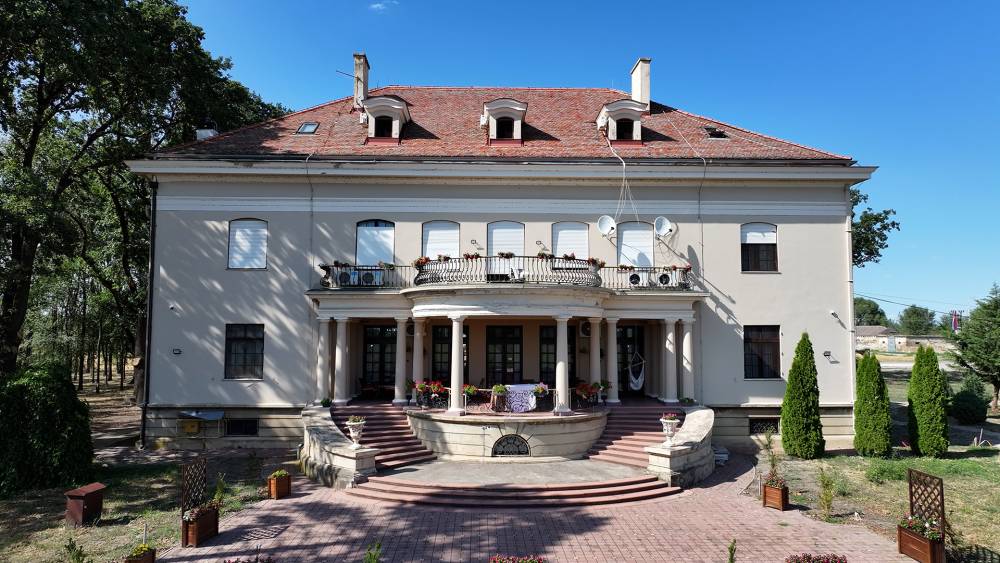
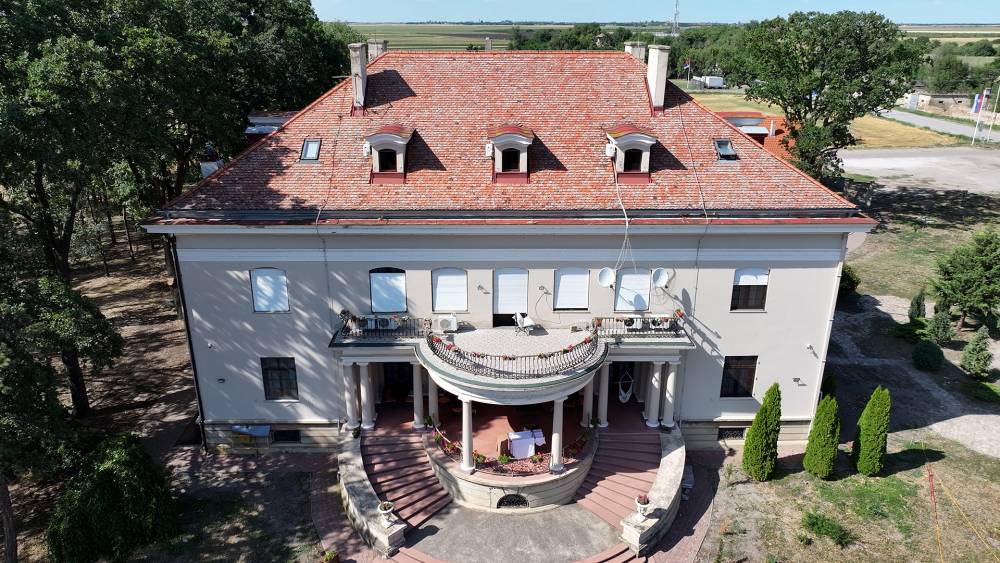
Neuhausen Castle in Srpska Crnja is located right next to the main road leading to Romania, almost at the border crossing. It is surrounded by a park on the former estate of Count Čekonjić, with the nearby “Julija” manor.
Neuhausen Castle in Srpska Crnja is located right next to the main road leading to Romania, almost at the border crossing. It is surrounded by a park on the former estate of Count Čekonjić, with the nearby “Julija” manor.
The castle was built by the German intelligence officer and general Franz Neuhausen, who intended it as a summer residence for rest and hunting. This is the only castle in the Banat region built during World War II, from 1941 to 1943, for the needs of a high-ranking officer of the German occupation army. It is also the last in the series of castles built in Vojvodina, which were constructed from the 18th century until the start of World War II.
According to tradition, the castle was designed by an unknown Russian prisoner – an architect capable of meeting the client’s requirements and creating a harmonious and functional architectural work. The castle was executed in an eclectic style with elements of classicism and baroque.
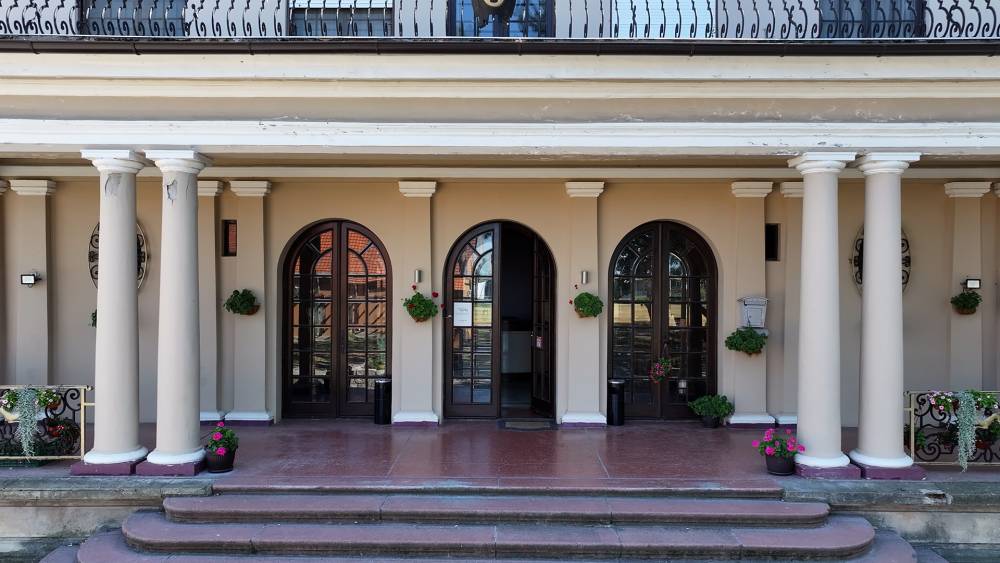
From the courtyard porch, one enters a salon with a fireplace and a wooden coffered ceiling. To the left of the salon is the economic part (kitchen), and to the right, another dining room. Upstairs, there is another salon connected to the hall by three openings, two of which are glazed with stained glass. The stained glass is done in the Art Deco manner and depicts two saints with their attributes: Saint Hubert, the patron of hunters, holding a bishop’s staff, and Saint Eligius, the patron of craftsmen, holding a church.
The owner of the castle is the Municipality of Nova Crnja, and since 1981 it has housed a motel with a restaurant. On the upper floor and attic, there are 14 hotel rooms (5 large suites and 9 double rooms).
Nikola from the Tourist Organization of Nova Crnja guides visitors through the castle and explains that they were unlucky with the last tenant, a woman from Romania, who, without consulting the Institute, cut down several trees around the castle to make lamp posts and made a few problematic interventions in the interior, but nothing that cannot be repaired.
The Municipality of Nova Crnja has serious plans for the castle, as it has been included in the list of 25 castles to be visited by French experts in September this year, as part of the Serbia–France collaboration project “Castles of Serbia – Protection of Cultural Heritage.” Additionally, thermal waters were discovered near the castle, offering significant potential for the development of spa tourism.