Marcibanji–Lederer Castle
Until 1781, Čoka was a sparsely populated area in northern Banat, recently liberated from Ottoman rule. In that year, Lörincz Marczibányi purchased it for the considerable sum of 95,500 forints. The following year he brought Hungarian serfs to work on his estate, and five years later Slovaks as well. Marczibányi began building the castle but never completed it. It was finished nearly a century later, in 1870, by the next owner – Károly Schwab (Sváb). After the extinction of the male line of the Marczibányi family, the castle was nearly “lost”. Meanwhile, the estate was bought by Ágoston Berber and brewers from Klusemann of Kebanja.
Until 1781, Čoka was a sparsely populated area in northern Banat, recently liberated from Ottoman rule. In that year, Lörincz Marczibányi purchased it for the considerable sum of 95,500 forints. The following year he brought Hungarian serfs to work on his estate, and five years later Slovaks as well.
Marczibányi began building the castle but never completed it. It was finished nearly a century later, in 1870, by the next owner – Károly Schwab (Sváb). After the extinction of the male line of the Marczibányi family, the castle was nearly “lost”. Meanwhile, the estate was bought by Ágoston Berber and brewers from Klusemann of Kebanja.
At the end of the 19th century, the property changed hands again – becoming the property of Artur and Károly Lederer, members of one of the wealthiest Jewish families of the time. They founded a farm, and the castle, together with the administrative house, became the economic driving force of the surrounding towns, villages, and lands.
The estate remained in the Lederer family until World War II, when Banat came under the rule of Nedić’s Serbia, a Nazi puppet state. During the war the castle briefly became the property of the occupiers – specifically Hermann Göring himself.
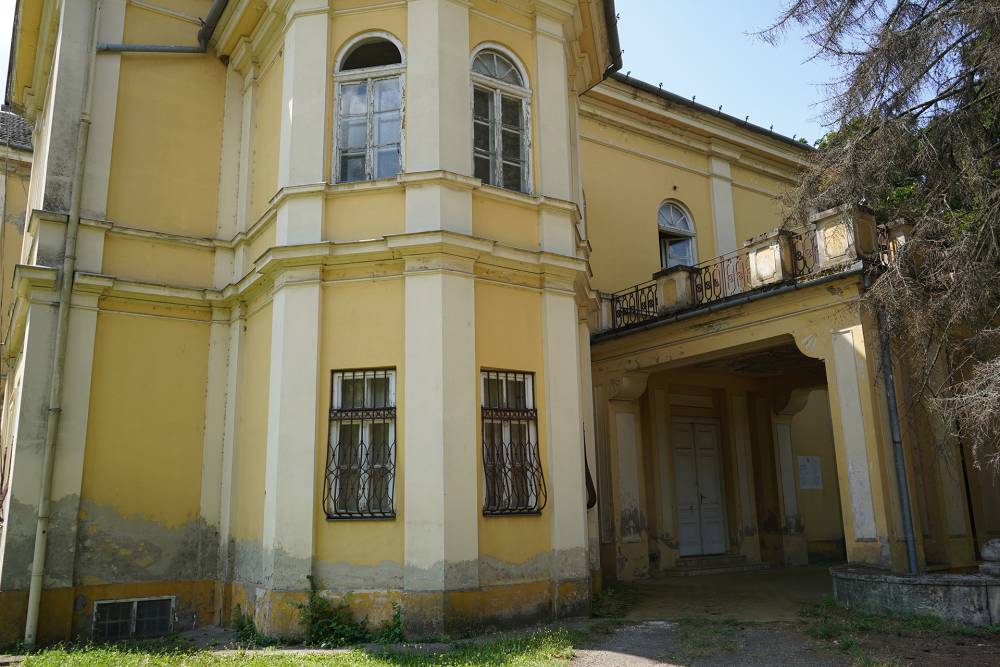
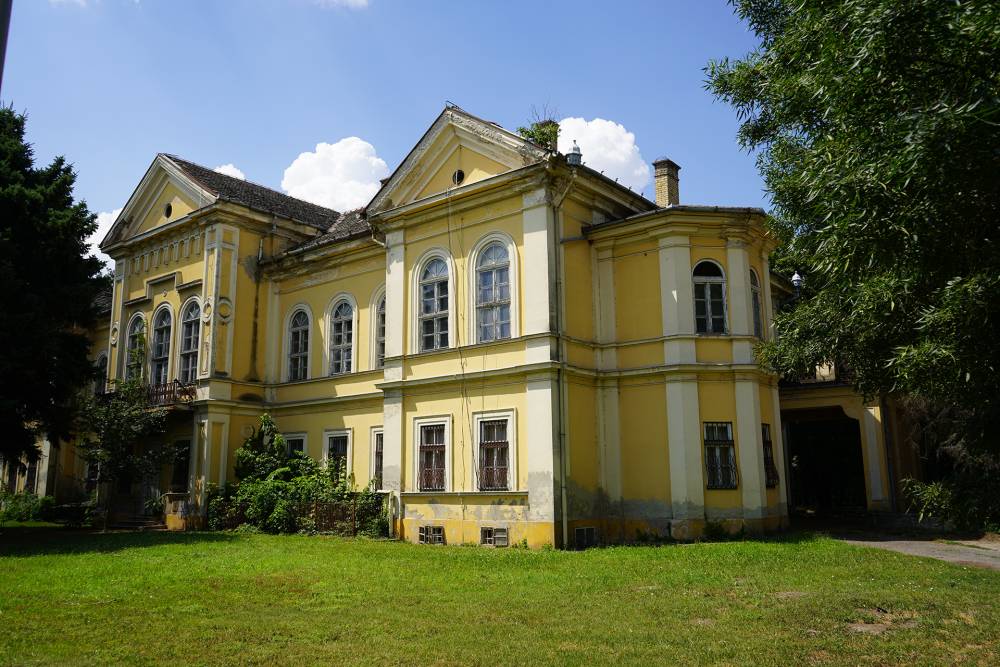
The castle is painted an elegant yellow, has one floor, an elongated layout, and a symmetrical spatial organization. The main façade faces the town’s main street, while the powerful “Old Park” lies behind it. The façade is articulated with lateral and central projections, each crowned with pediments. The windows are rhythmically arranged: straight-topped on the ground floor and arched on the upper floor, decorated with wrought-iron grilles.
The roof is four-sided, enriched with additional roof elements above the side projections. The structure has classical characteristics in form, façade, and symmetry, but due to construction over different periods, it also incorporates eclectic features.
It is considered one of the most stylistically refined castles in Vojvodina, with significant architectural value.
After World War II, the castle was confiscated, and in 1950 it became the administrative building of the agricultural enterprise “Čoka”, as indicated by a marble plaque. In 1960 a fire destroyed the roof. Eternit plates were replaced with traditional tiles, but the original roofline remained. The authentic park fence was demolished at the same time.
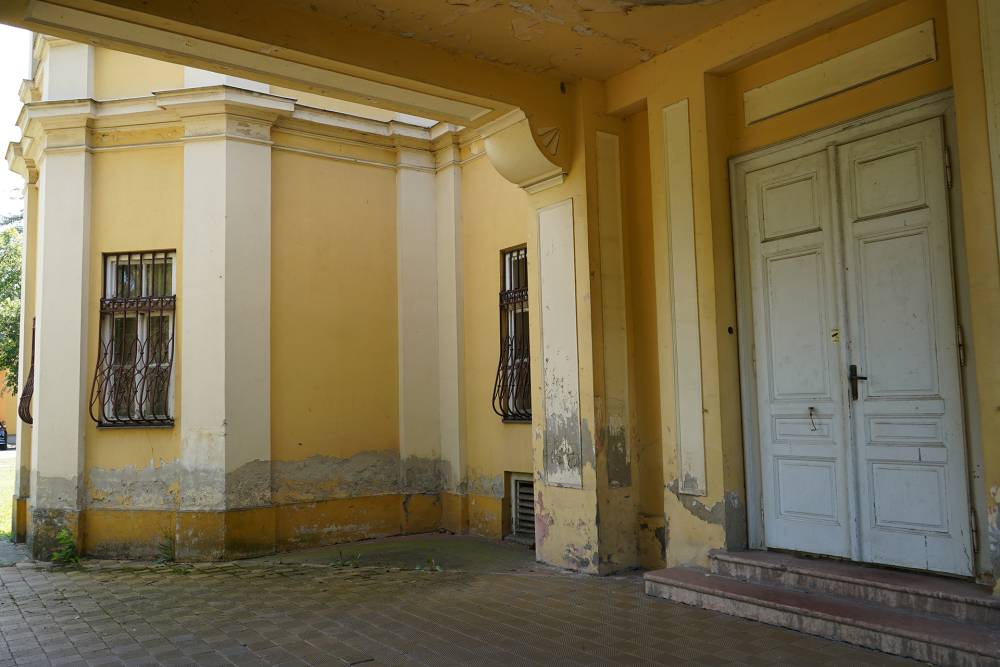
Today, the castle has no function and is deteriorating. Moisture is visible, woodwork is damaged, plaster is falling off. The building is practically a “homeless structure” – all movable items have been removed, except for a few office rooms. Despite its protected status, it cannot be visited. It has about forty doors and windows that remain partially or fully open throughout the year, accelerating decay.
Source: dvorcisrbije.rs