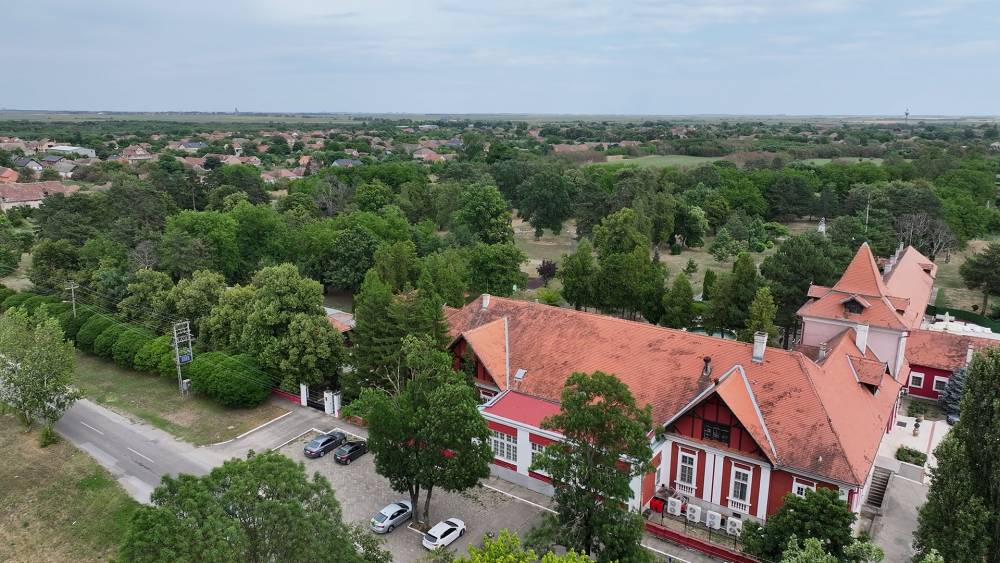
Lazar Castle
Lazar Castle, better known as Ečka Castle, is located in Ečka, municipality of Zrenjanin. The Ečka estate was purchased at a chamber auction in 1781 by Luka Lazar (some sources “Lazarjan”), an Armenian from Transylvania. He established a settlement on the estate and built a church for his serfs.
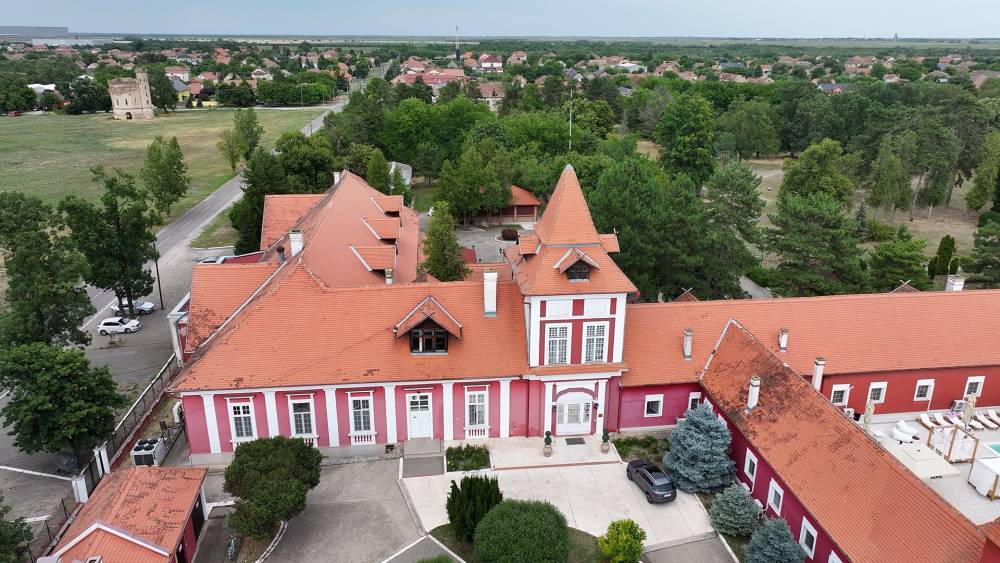
Lazar Castle, better known as Ečka Castle, is located in Ečka, municipality of Zrenjanin. The Ečka estate was purchased at a chamber auction in 1781 by Luka Lazar (some sources “Lazarjan”), an Armenian from Transylvania. He established a settlement on the estate and built a church for his serfs.
The castle was built in the early 19th century in the English style by his son Agošton Lazar. In 1870, the estate and castle were purchased by Count Felix Ornonkur (or Arnonkur), who expanded and significantly modified it between 1898 and 1899. Over time, the family adopted a new surname and noble titles – De la Fontanj und Fon Arnonkur-Unfercagt.
Lazar Castle is a ground-floor but impressive building with a complex layout, later extended with an L-shaped wing. A central tower with a pyramidal roof sits on the elongated wing, while an annex with a veranda supported by double Ionic columns extends along the ground-floor wing. The castle complex is surrounded by a small park with sculptures, fountains, and garden furniture.
The owner was a famous thoroughbred horse breeder. Despite interior and exterior modifications, the building remains unique, with architectural solutions seen in Southern Italy and Sicily. After renovations and extensions, the Count hosted a ball for his daughter’s birthday; Franz Liszt performed on the grand opening on August 29, 1820, attended by prominent figures of the Austrian Monarchy, including Count Esterházy.
The castle has historically been a gathering place for hunting enthusiasts, visited by Austro-Hungarian heir Franz Ferdinand and Yugoslav King Alexander Karađorđević. After World War II, the castle was confiscated, and the owners left the country. Today, it is fully renovated and functions as a hotel. Nearby are a church, a pond, and a derelict water tower. The castle was declared a cultural monument in 2001, serving as an example of successful restoration and functional adaptation.
A legend recorded by Milan Belegišanin tells of a traveling troupe led by Jove Čizmić arriving at the castle. The spahi’s daughters noticed a handsome young man and a mysterious girl during preparations. The play enchanted them, but the young man was later killed by dogs in the park, while the girl never married and lived in the castle until her death. Even today, young couples visit the castle park, and the shade of its trees is considered restorative.