Servijski–Šulpe Manor
The Servijski–Šulpe family residence is located in Novi Kneževac, northern Banat, formerly known as Turska Kanjiža, to distinguish it from Kanjiža in today’s Hungary. The manor was built by Marko Servijski, an educated and respected citizen of Novi Sad. In 1782, he purchased Turska Kanjiža for 2,000 forints and later built the manor on his estate. The building is considered a cultural monument of great importance.
Location and Background
The Servijski–Šulpe family residence is located in Novi Kneževac, northern Banat, formerly known as Turska Kanjiža, to distinguish it from Kanjiža in today’s Hungary.
The manor was built by Marko Servijski, an educated and respected citizen of Novi Sad. In 1782, he purchased Turska Kanjiža for 2,000 forints and later built the manor on his estate. The building is considered a cultural monument of great importance.
Family Origins and Construction of the Manor
Marko Servijski, a wealthy Aromanian (Cincar) merchant, bought the estate 11 years before the manor was constructed. The manor itself was built in 1793.
By purchasing the recently liberated settlement, he received the noble title “de Servijski” and the epithet “of Turska Kanjiža”.
Historical sources state that the family previously used surnames such as Đuričko, Đurković, or Đorđević. Their wealth came primarily from trade in wool cloth.
Marko was married to Katarina Duka, daughter of Aromanian merchant Teodor Duka; her dowry significantly increased the family fortune. His son Đorđe lived mostly in Novi Sad. Both were benefactors of schools and churches for both Serbian Orthodox and Catholic communities.
Inheritance: Šulpe and Talijan Families
In his 1855 will, Đorđe Servijski — known as the “Serbian muse and patron” — bequeathed the estate to his niece Katarina. She brought it as dowry to the Šulpe (Schulpe) family when she married Emil Šulpe.
At that time, the manor contained:
-
a 3,000-volume library,
-
a valuable collection of Meissen porcelain,
-
silver and bronze objects,
-
antique furniture,
-
hunting portraits,
-
old firearms.
Their daughter, Vilhelmina Šulpe, married Andor Talijan, bringing the manor into the Talijan family, who owned two additional manors in Turska Kanjiža: one built by Andor Talijan, and another in 1856 by Baron Fedor Feilić. Both later became property of Bela Talijan.
The Manor in the 20th Century
During World War II, all movable property was lost.
Today, the building houses:
-
the courthouse,
-
municipal administrative offices,
-
the Novi Kneževac cadastre.
Adaptations for administrative use caused the loss of much of its original authenticity.
Architectural Features
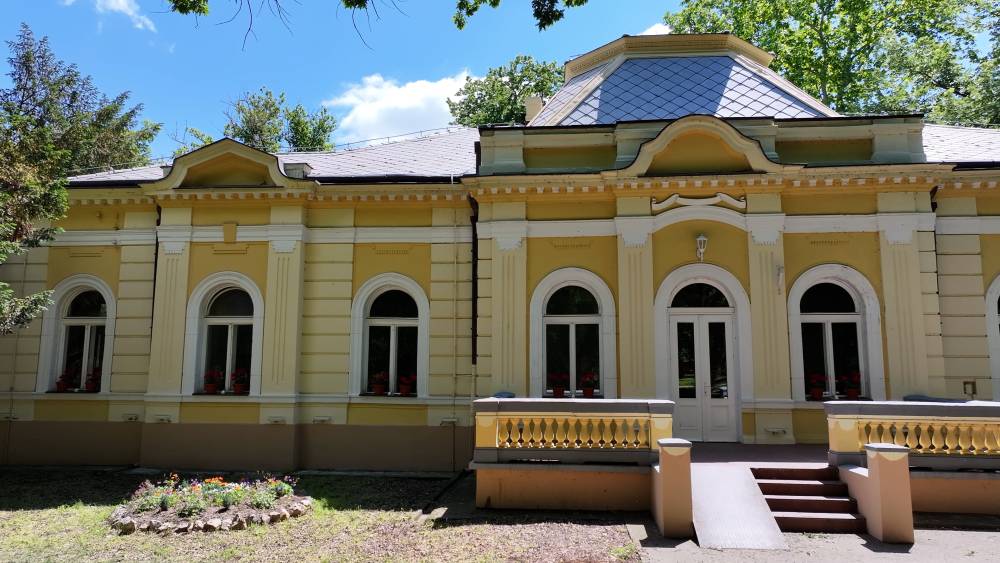
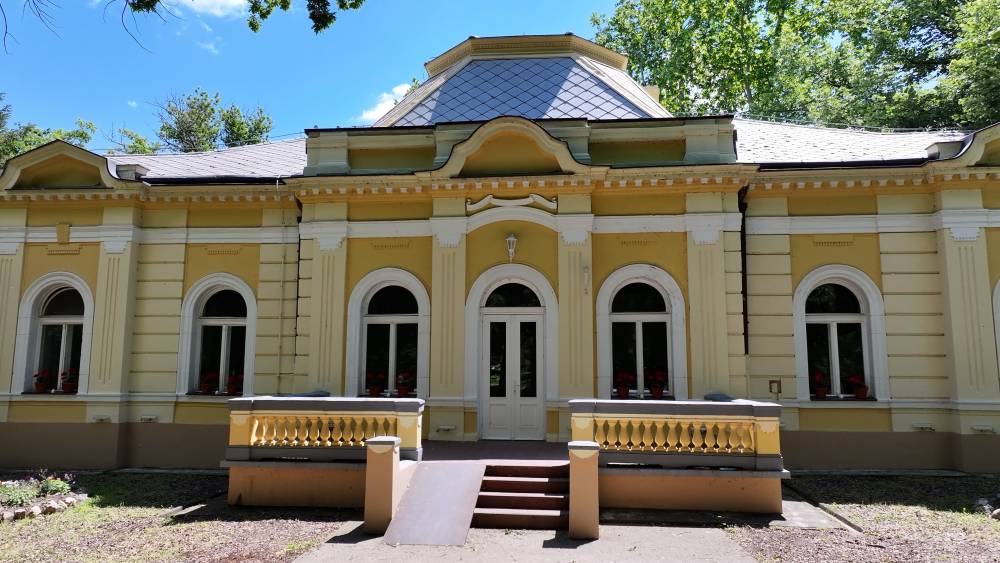
The Servijski–Šulpe Manor is considered one of the oldest, largest, and most luxurious in Vojvodina.
Style: Late Baroque with elements of early Neoclassicism (copf architecture).
Characteristics:
-
elongated rectangular floor plan,
-
ground floor + first floor, yet monumental appearance,
-
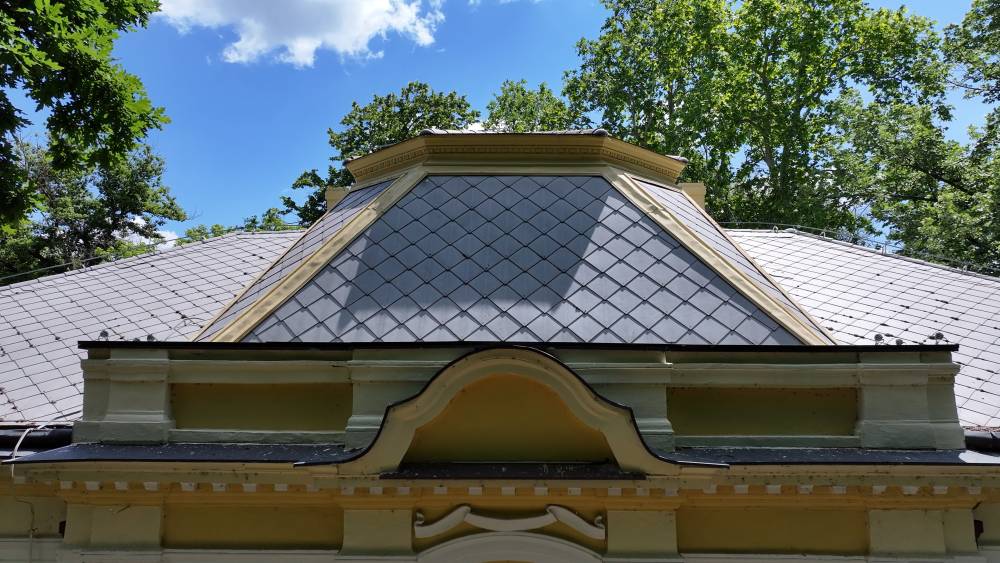
central avant-corps with mansard roof and first-floor balcony,
-
attic above the cornice with relief coats of arms,
-
wrought-iron fence,
-
profiled plaster decorations around windows,
-
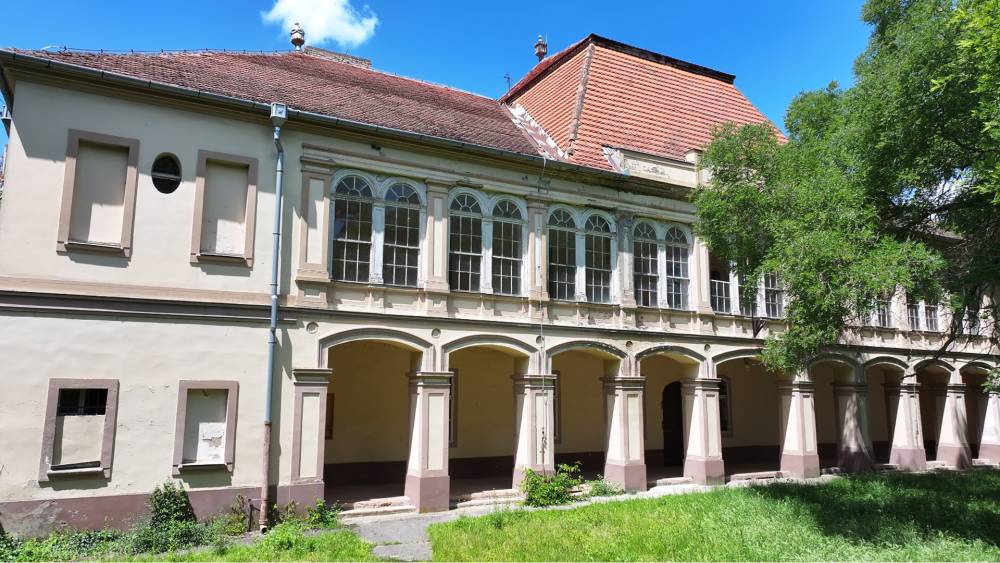
courtyard façade with large open portico and paired windows.
The rhythmic window arrangement gives the building a light and airy impression.
Conservation work was carried out in 1976.
The manor is in fair condition but requires full restoration.